Digital Presence = Career Presence

Digital Presence = Career Presence

Article content

🌐 The New Résumé

Before recruiters meet you, they Google you. Your digital footprint speaks long before your CV does. In today’s job market, visibility = credibility. Whether you’re a student, a freelancer, or a manager, the way you show up online quietly shapes the opportunities that find you.

💡 Why It Matters

  • Nearly 8 out of 10 employers screen candidates online before deciding whom to interview.
  • Students with active LinkedIn or portfolio pages are twice as likely to be shortlisted.
  • Your online voice tells people how you think—not just what you’ve done.

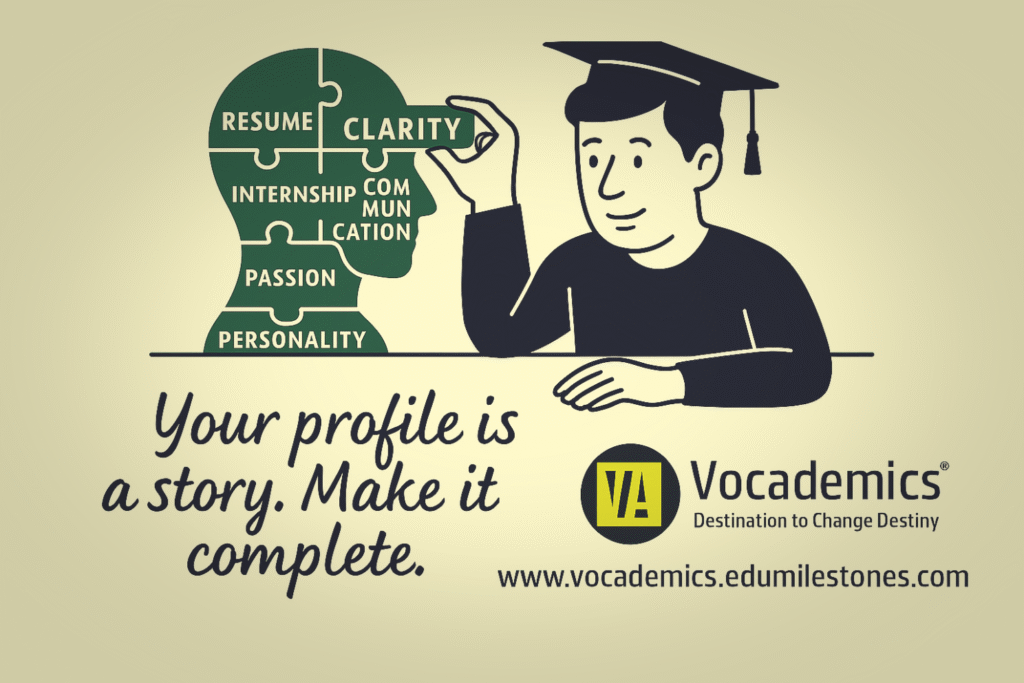
A résumé lists achievements. Your digital presence tells your story.

🔄 From Passive Scroller → Purposeful Builder

You don’t need to “go viral.” You need to be visible for the right reasons. Every post, project, and comment adds a brushstroke to your professional portrait.

Ask yourself:

“If someone saw only my online profile, would they understand who I am becoming?”

🧭 Three Platforms That Build Your Career

Article content

1️⃣ LinkedIn – Your Professional Story

  • Headline: one clear line that says what you do or aspire to do.
  • About: your brief life philosophy and focus.
  • Posts: share insights, not selfies—less noise, more value.

2️⃣ GitHub / Behance / Portfolio Sites – Your Work in Action For coders, designers, writers, and analysts, these spaces are proof of skill. Let people see your process, not just the polished result.

3️⃣ Personal Website or Linktree – Your Hub Bring all your worlds together—your résumé, projects, and contact links—in one clean space.

Article content

🚫 What Not to Do

❌ Use your career page for random selfies or political rants.

❌ Spam the feed with “Open to Work 🙏” posts without context.

❌ Comment for visibility instead of adding insight.

Your tone online is part of your professional etiquette.

⚡ Quick Wins for a Strong Digital Brand

  • Keep one professional photo across all platforms.
  • Follow 10 industry voices who genuinely teach you something.
  • Share one reflection a week—a project, a challenge, or a small learning.
  • Engage thoughtfully on others’ posts; curiosity beats cleverness.

Consistency > Volume.

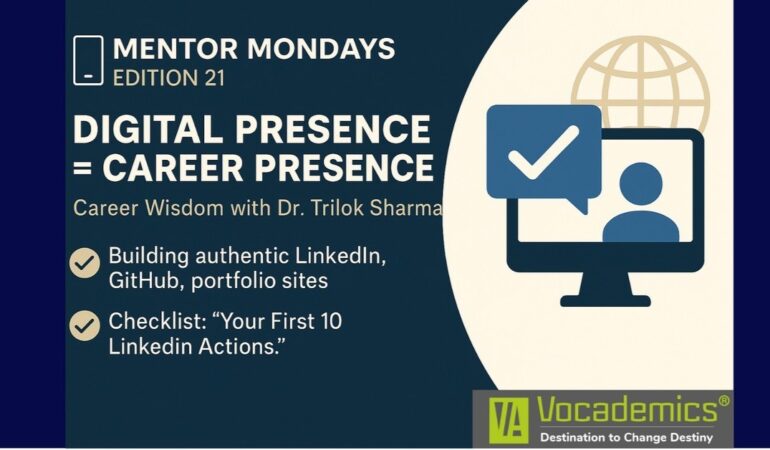
✅ Add-on Checklist: Your First 10 LinkedIn Actions

Article content
Your First 10 LinkedIn Actions

1️⃣ Update your headline – be specific and clear.

2️⃣ Add a profile photo + banner that match your field.

3️⃣ Write a human, first-person About section.

4️⃣ List your top three skills.

5️⃣ Add education & projects with brief details.

6️⃣ Request two recommendations from mentors or peers.

7️⃣ Follow five relevant companies in your domain.

8️⃣ Connect with peers and faculty mentors.

9️⃣ Post your first original insight.

🔟 Engage on others’ posts three times a week.

🪞 Closing Thought

“If you don’t tell your story online, someone else—or an algorithm—will.”

Your career presence is built click by click—quietly, consistently. Start shaping it today.

Article content

👉 CTA: Begin your career-building journey with guided assessments and mentoring at vocademics.edumilestones.com

Read More
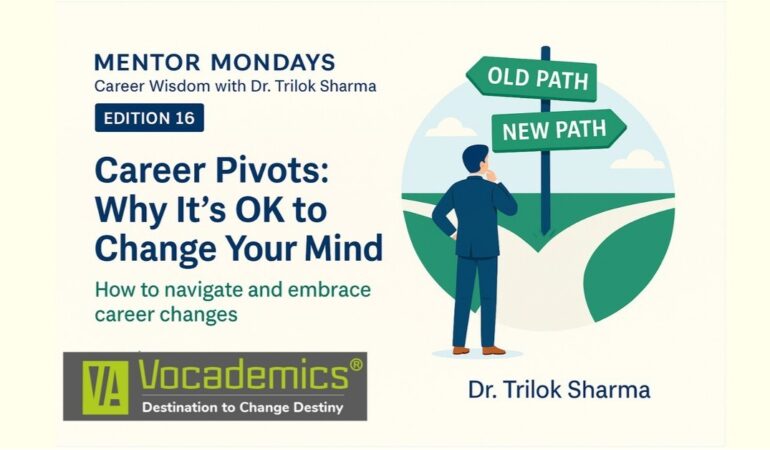
Why It’s OK to Change Your Mind

Why It’s OK to Change Your Mind

How to navigate and embrace career changes

🌱 Opening Thought

Have you ever felt stuck in a job, wondering if it’s “too late” to change paths? Here’s the truth: career pivots are not signs of failure—they are signs of growth.

In today’s world, where industries evolve rapidly and new opportunities open every year, changing your mind about your career is not only acceptable, it’s often essential.

🔄 Why Career Pivots Are Normal

Article content
Your career is a journey with turns, not a straight line!
  • On average, professionals change jobs 5–7 times in their lifetime.
  • Evolving skills, shifting economies, and personal aspirations make pivots inevitable.
  • The most successful people are not those who never change, but those who adapt with confidence.

⚡ Triggers That Lead to Career Change

  • Burnout or dissatisfaction – wanting more meaning in work.
  • New passions – discovering something that excites you.
  • Industry shifts – automation, AI, or market disruption.
  • Life transitions – relocation, family priorities, health considerations.

🧭 How to Navigate a Career Pivot

Article content
Navigate your pivot with confidence

Think of a pivot as a strategic shift, not a random leap. Here’s a five-step approach:

  1. Reflect – What’s working, what’s not? What energizes you?
  2. Research – Study industries, future skills, and talk to mentors.
  3. Reskill – Use courses, certifications, or side projects to bridge gaps.
  4. Reconnect – Build networks in your new interest area.
  5. Reposition – Update your CV, LinkedIn, and craft your story around transferable skills.

📖 Real Stories, Real Pivots

Article content
Real Life Examples

Career pivots are not theoretical—they’re lived realities.

  • From IT to CSR Leadership: My daughter-in-law is a B.Tech. (Computer Science) graduate who began her career as an IT Engineer with L&T. While the role was prestigious, she soon realized this was not where her heart truly was. Driven by her passion for social impact, she transitioned into the Social Development sector. Today, she is thriving as a CSR and Sustainability Manager with a leading MNC in Dubai. Her journey proves that pivoting is about aligning passion with purpose.
  • My Own 40+ Year Journey: Coming from a small village, I had no roadmap for careers. I began as a school teacher (at the very school I started in the 1980s), then moved into journalism, where I excelled. From there, I transitioned into the corporate world, then into social service and philanthropy, and back again to the corporate sector—where I was honored to be listed in Forbes Middle East as one of the Top 50 Indian CEOs in the Arab World (2014–2016). Today, after four decades, I serve as a coach, trainer, and mentor. Each pivot wasn’t a reset—it was a new chapter in a continuous story of growth.

These examples show that no experience is wasted; every pivot adds depth and dimension to your professional and personal life.

💡 The Mindset Shift

Instead of fearing “starting over,” reframe it as “building on what I already know.” Every role you’ve held—whether in sales, teaching, management, or research—adds layers of transferable skills. 👉 No experience is wasted. Every pivot enriches your growth story.

🌟 Key Takeaways

  • Changing your mind is not quitting—it’s evolving.
  • Your career is a marathon, not a sprint.
  • Flexibility is a superpower in a changing world.
  • Each pivot adds a new dimension to your legacy.

🚀 Final Word

Article content

The next time you feel the urge to pivot, don’t silence it. Listen closely. It might just be your next big leap.

🔗 Call to Action

Thinking about your own career pivot? 👉 Explore your strengths and future-fit opportunities with https://vocademics.edumilestones.com

Read More
Crafting a Career Vision Statement

Crafting a Career Vision Statement

Why a Career Vision Statement Matters

Article content
Difference between Mission & Vision

In today’s fast-paced professional world, it’s easy to get lost in endless notifications, deadlines, and competing priorities. Without a clear sense of direction, our careers can easily turn into a series of disconnected jobs rather than a meaningful journey.

That’s where a career vision statement comes in. Think of it as your personal North Star—a guiding declaration that connects your values, strengths, and aspirations to a future worth striving for.

Unlike a mission statement (focused on the present), a vision statement paints a picture of your desired future. It inspires you, helps filter opportunities, and anchors you during setbacks.

💡 In short: It’s the difference between driving aimlessly and navigating with a clear destination.

The Power of a Clear Vision

Research shows that professionals with a strong sense of purpose report 64% higher fulfillment and are 50% more likely to hold leadership roles (Imperative & LinkedIn).

Why? Because clarity fuels:

  • Direction – guides career choices and transitions.
  • Meaning – connects daily work with deeper purpose.
  • Focus – filters distractions and misaligned opportunities.
  • Resilience – helps you bounce back from failures.

Consider Elon Musk: his vision of sustainable energy and space exploration has kept him pushing through repeated failures. Your vision doesn’t need to be world-changing, but it should be personally compelling enough to energize you through challenges.

Laying the Foundation: Reflection First

Article content
Reflection to Discover Your Vision

Before writing your vision, you need to reflect on three key areas:

  1. Strengths What puts you in “flow” where time flies? What do others seek your help for? When have you felt most competent and alive?
  2. Values What principles do you never compromise on? What causes consistently capture your attention? What kind of culture brings out your best self?
  3. Impact What problems do you feel drawn to solve? How could your talents serve society or your field? What legacy would you like to leave behind?

Patterns in your answers reveal the raw material of your vision.

Crafting Your Career Vision Statement

Once you’ve reflected, use this step-by-step process:

  1. Create the right environment – quiet, focused, and distraction-free.
  2. Visualize your future – imagine your ideal career day 5–10 years ahead. Who are you working with? What problems are you solving? How do you feel?
  3. Write in the present tense – as if you are already living it.
  4. Keep it concise – 1–3 sentences that inspire and guide you daily.
  5. Test for resonance – read it aloud. Does it excite you?
  6. Seek feedback – mentors or trusted peers can help refine it.
  7. Finalize – clarity + authenticity + aspiration.

📌 Formula: “I [action verbs] [specific contribution] for/by [audience or means] to achieve [desired impact].”

Article content
Crafting Your Career Vision Statement

💡 Example: “I create environments that energize communities by cultivating relationships that elevate impact.”

Using Your Vision in Daily Life

A vision statement is not meant to sit in a notebook. It should be a practical decision-making tool.

  • Make it visible – put it on your desk, wallpaper, or diary.
  • Filter opportunities – ask: Does this bring me closer to my vision?
  • Set boundaries – decline roles/projects that don’t align.
  • Course-correct – regularly check if your career path matches your vision.
  • Stay resilient – revisit your vision when setbacks hit—it turns failures into temporary detours.

Real-World Examples

  • Content Creator & Coach: “To touch the lives of as many people as possible, empowering them to achieve personal and career success through coaching and inspiring content.”
  • Corporate Leader: “To become a leader who transforms organizations into inclusive, innovative workplaces while balancing family and personal growth.”
  • Healthcare Researcher: “To revolutionize healthcare by conducting cutting-edge research that improves women’s lives globally.”

Each balances clarity, authenticity, and aspiration—and so should yours.

Common Pitfalls & How to Avoid Them

  • Generic jargon – Write in your own words, not corporate clichés.
  • Perfectionism – A draft vision is better than no vision.
  • Rigid mindset – Your vision can evolve as you grow.
  • Vagueness – “I want to be successful” won’t inspire action.

👉 Tip: Review your vision annually—refine it as your journey unfolds.

From Vision to Roadmap

A vision is your destination; a roadmap is the bridge.

Article content
From Vision to Roadmap

Break it down into milestones:

  • Next 6 months: Take one meaningful action (e.g., course, mentor, project).
  • 1 year: Build 2–3 vision-aligned skills.
  • 3 years: Secure roles/projects that align with your impact.
  • 5–10 years: Live your vision fully.

Also build:

  • A support network (mentors, peers, allies).
  • A skills inventory (identify gaps to close).
  • Reflection routines (monthly or quarterly check-ins).

Your North Star

A career vision is more than professional strategy—it’s an act of self-leadership.

When your work aligns with your values and aspirations, you gain energy, resilience, and fulfillment. Even routine tasks feel purposeful when tied to a larger vision.

As Picasso said:

“The meaning of life is to find your gift. The purpose of life is to give it away.”

✍️ Your Action Step

This week, take 30 minutes to:

  1. Draft your career vision statement (even imperfectly).
  2. Share it with a mentor or friend for feedback.
  3. Align one concrete action with it within 30 days.

Remember: we don’t design our careers by chance—we design them by vision.

🔗 Call to Action

Need structured help in shaping your career vision?

👉 Explore Vocademics International LLP’s Career Vision Workshop – and mention Mentor Mondays to receive 15% off your consultation.

🌐 Learn more: vocademics.edumilestones.com

📣 Share your vision journey in the comments.

What’s your draft vision?

What challenges are you facing?

Let’s build clarity—together.

Read More
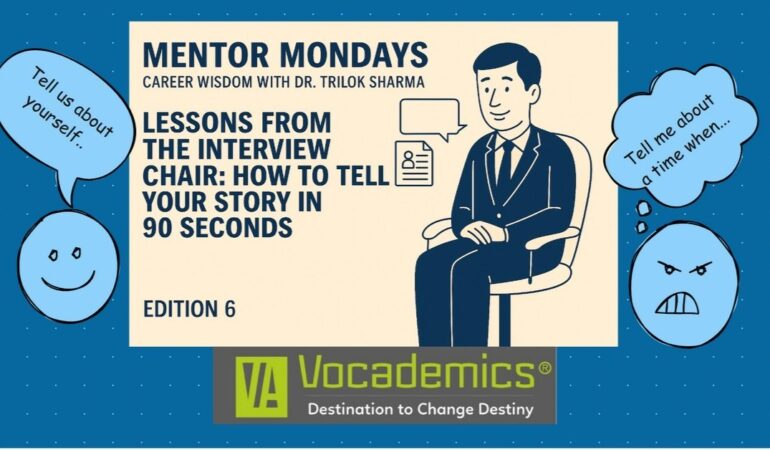
How to Tell Your Story in 90 Seconds

How to Tell Your Story in 90 Seconds

Welcome back to Mentor Mondays, your weekly guide to professional growth, skill-building, and career clarity.

Imagine this: You walk into an interview, the panel looks at you, and the first question comes:

“So, tell us about yourself…”

It sounds simple, but in those 90 seconds, you have a rare opportunity to shape the interviewer’s perception. Will you list your degrees? Recite your resume? Or will you tell a story that is clear, confident, and compelling?

This edition is all about crafting that perfect personal pitch. Whether you’re a student entering the job market or a professional transitioning roles, this guide will help you articulate your journey, values, and goals — in just one and a half minutes.

🕐 Why 90 Seconds Matter

Most recruiters form an impression of you within the first few moments. A 90-second pitch:

  • Sets the tone for the rest of the interview
  • Highlights your strengths and uniqueness
  • Demonstrates your clarity of thought and communication
  • Builds rapport and shows confidence

A great pitch can make even average answers shine. A poor one can lose attention before you even begin.

🎨 Structure: The 3-Part Formula

Use this 3-part structure to keep your pitch focused and memorable:

1. The Present

Start with what you are doing now. Mention your current role, field of study, or internship experience.

“I’m currently pursuing my final year in B.Tech with a focus on Artificial Intelligence, and just completed a 6-month internship at Infosys in the NLP division.”

2. The Past

Then talk about relevant experiences that shaped your journey — academics, leadership roles, or volunteer work.

“During my second year, I led a campus hackathon and discovered my passion for problem-solving and mentoring peers.”

3. The Future

Conclude with your goals and what you’re looking for.

“I’m now looking to apply my skills in a dynamic organization that values innovation and learning, especially in the AI and data ethics space.”

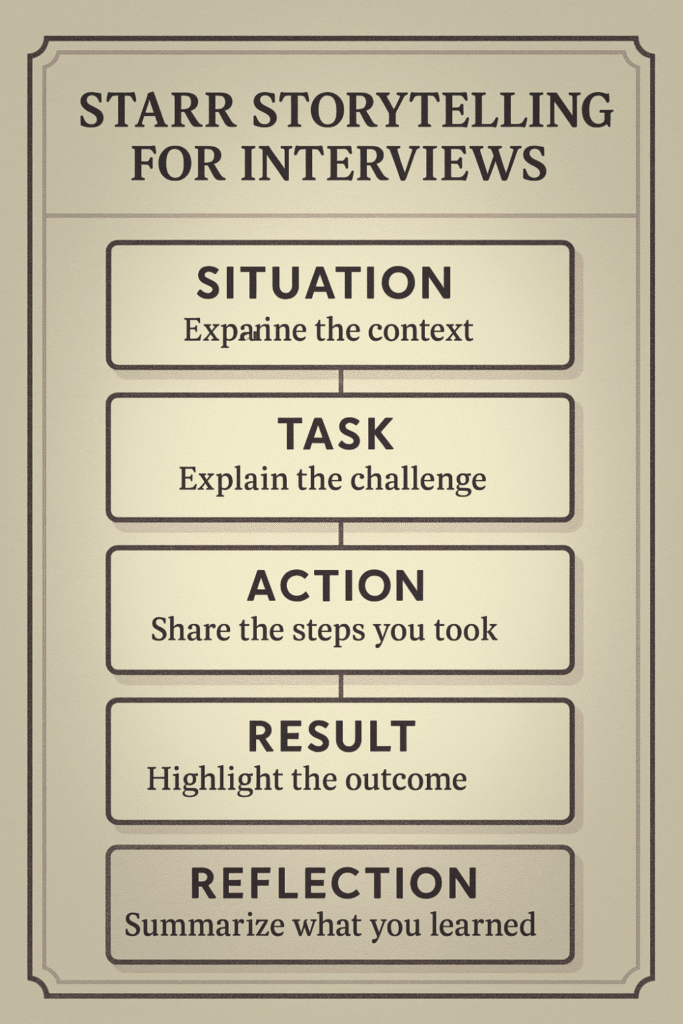
🎭 Storytelling Technique: The STARR Framework

Use the STARR method to answer behavioral questions and enrich your career pitch:

  1. Situation – What was the context?
  2. Task – What challenge or goal did you face?
  3. Action – What steps did you take?
  4. Result – What was the outcome?
  5. Reflection – What did you learn?

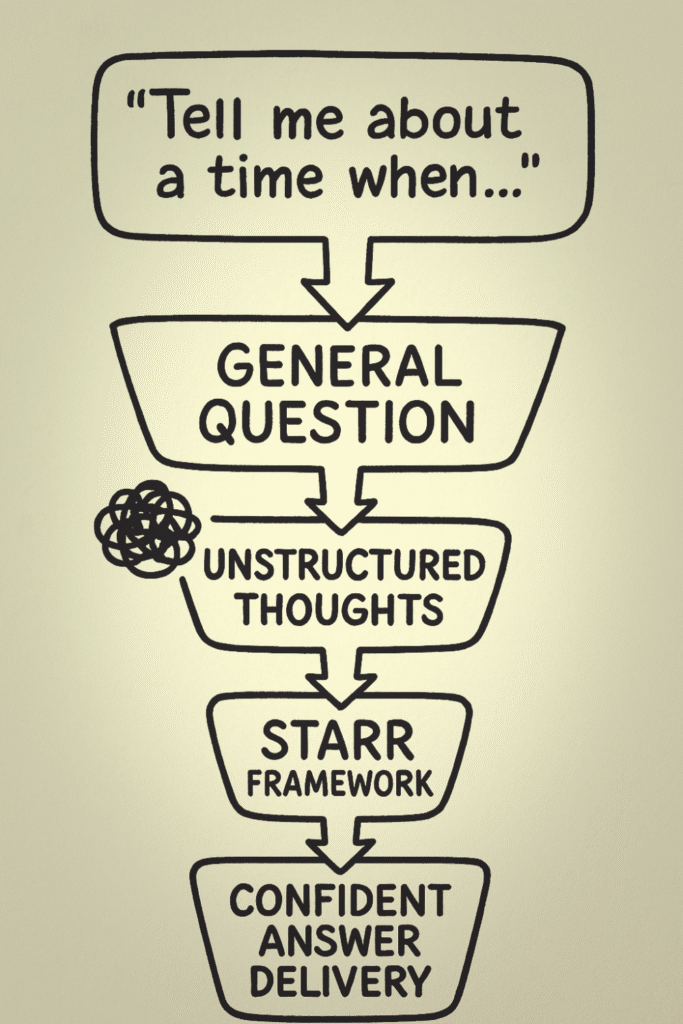
To truly master behavioral interviews, it’s important to understand how unstructured thoughts often cloud our ability to answer confidently. This is where the STARR Framework becomes essential. The “Behavioral Interview Questions Funnel” sketch illustrates this beautifully—it begins with a broad and often vague prompt like “Tell me about a time when…”, which can easily trigger scattered or unclear memories. Without structure, answers can become lengthy or irrelevant. By applying the STARR method, you organize your response into a clear, logical flow, leading to a confident, outcome-focused delivery that impresses interviewers.

🔹 Example:

“During my second year of college, I realized our robotics club had become inactive and lacked participation. (Situation)

I felt responsible to revive it and set a goal to rebuild its presence on campus. (Task)

I initiated a robotics bootcamp, restructured the team, and onboarded enthusiastic juniors through outreach events. (Action)

As a result, within three months, the club grew to 60+ active members and won two inter-college competitions. (Result)

This experience taught me the value of initiative, leadership, and creating sustainable engagement through collaboration. (Reflection)

📚 Dos and Don’ts

Dos:

  • Keep it conversational
  • Practice it out loud, but don’t memorize it like a script
  • Highlight soft skills (communication, adaptability, teamwork)
  • Add personality (what drives you, what excites you)

Don’ts:

  • Don’t recite your entire resume
  • Don’t use jargon or cliches
  • Don’t oversell or sound rehearsed

🌐 Building Your Future Skills Pyramid

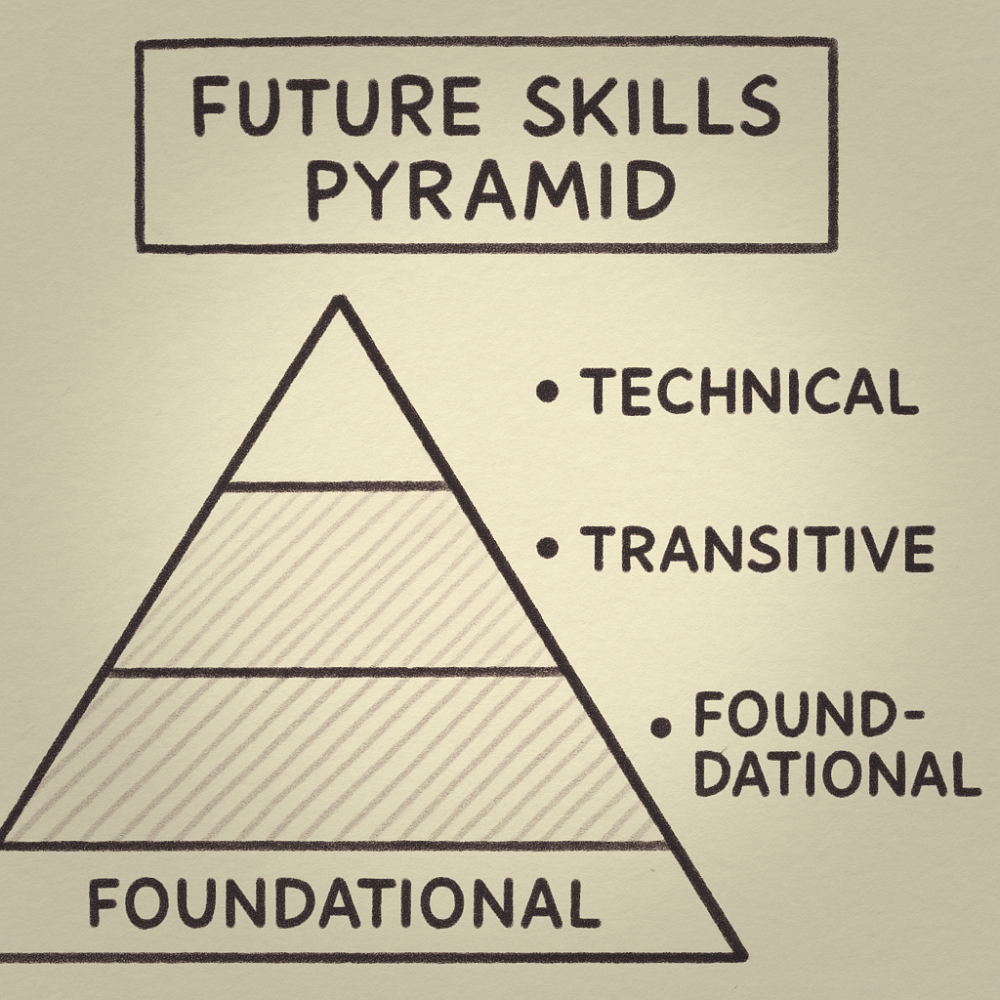
As you sharpen your storytelling and interview techniques, don’t forget to invest in the skills that will shape your career in 2030 and beyond. Our Future Skills Pyramid sketch offers a visual roadmap—starting from Foundational Skills like communication and digital literacy, moving up to Transitive Skills such as adaptability and collaboration, and peaking with Technical & Domain Expertise relevant to your field. Building this layered skillset ensures that you’re not just interview-ready, but also future-ready, equipped to thrive in dynamic, AI-driven work environments.

🌟 From Dr. Trilok’s Desk

“A great introduction is not a trailer of your life story. It’s a window into your mindset.”

When you tell your story with authenticity and purpose, you instantly become memorable.

🎓 Practice Task

Take a moment now to write your 90-second pitch using the 3-part model.

  • What’s your present?
  • What’s your past?
  • What’s your future aspiration?

Read it out loud. Then refine it with STARR examples. Practice until it becomes a part of you, not a performance.

🚀 Ready to Own the Room?

For personalized feedback, interview coaching, or career guidance, visit: www.vocademics.edumilestones.com

See you next Monday with another edition of Mentor Mondays: Career Wisdom with Dr. Trilok Sharma.

Read More
Recruiters Look Beyond Your Degrees & CGPA

Recruiters Look Beyond Your Degrees & CGPA

Welcome to the 5th edition of Mentor Mondays. Today we decode real-world truths about careers, employability, and leadership every week.

Today, we explore a question almost every student wonders at some point:

“If not just marks and degrees, what exactly are recruiters looking for?”

In this edition, we reveal the invisible checklist used by employers to assess potential hires — and how you can prepare to stand out before you even enter the interview room.

🔍 The Myth: Degrees = Employability

Let’s debunk the biggest myth first: a degree alone doesn’t guarantee a job. In a skills-first economy, recruiters are more interested in:

  • How you solve problems
  • Whether you fit their work culture
  • How clearly you understand the role

🎯 “Good grades may open the door. But it’s your skills, attitude, and story that keep you in the room.

🧠 The Real Recruiter Checklist

Here’s what truly matters:

  1. Clarity of Thought – Do you know what you want and why?
  2. Project or Internship Experience – Have you applied what you’ve learned?
  3. Communication Skills – Can you explain, listen, and present clearly?
  4. Initiative – Have you taken ownership in any setting?
  5. Problem-Solving Ability – Can you break down challenges?
  6. Team Fit – Are you collaborative and coachable?
  7. Learning Agility – Are you willing to evolve?

These aren’t just preferences — they’re predictors of long-term success.

🎓 Do Academics Still Matter?

Yes — but with perspective. Recruiters check:

  • Consistency in your academic journey
  • Relevant subjects or skills for the role
  • Efforts at upskilling — certifications, workshops, mini-courses

“Your degree proves discipline. But your deliverables show potential.”

📂 Build a Recruiter-Ready Profile

✅ Step 1: Create a Value-Oriented Resume

  • Use action words like “Initiated”, “Streamlined”, “Facilitated”
  • Highlight impact, not just activity

✅ Step 2: Master Your 90-Second Introduction

  • Who you are
  • What you’ve done
  • What you bring

✅ Step 3: Create a Simple Digital Portfolio

Use platforms like Canva (PDF), GitHub, Behance, Google Drive

Include links to your projects, achievements, or certificates

💬 From Dr. Trilok’s Mentor Desk

“Recruiters aren’t looking for perfect people. They’re looking for prepared people. Be the one who shows up with clarity, curiosity, and contribution.”

Your story is your edge, you need to frame it well and tell it well.

✅ Action Point:

  • Audit your resume: Does it reflect who you are and what you can do?
  • Practice your elevator pitch this week with a friend or mentor
  • Still unsure what suits your profile? Let psychometrics guide you.

🔍 Explore www.vocademics.edumilestones.com for a personalized assessment.

Read More
Too Many Interests vs. The Right Career Path

Too Many Interests vs. The Right Career Path

Welcome to the 4th edition of Mentor Mondays. We are here to discuss yet another topic regarding essential career guidance for the thinkers, dreamers, and doers of tomorrow.

Have you ever felt like you’re interested in too many things at once? You love writing, enjoy data, find psychology fascinating, and admire entrepreneurship. But when it’s time to pick a career, you’re stuck at the crossroads. If this sounds like you, you might be what psychologists call a multipotentialite — someone with multiple interests and creative pursuits.

Do not consider it as your weakness, it is basically a strength of yours!

But the million-dollar question is, how to utilize this strength?

In this edition, let’s explore how you can move from career confusion to clarity, using frameworks like Ikigai and psychometric career mapping to discover a direction that aligns with your talents, values, and passions.

🧠 Career Confusion is Real (and Normal)

Choosing one direction when you have many interests feels like letting go of parts of yourself. But clarity doesn’t come from eliminating options — it comes from organizing them.

Ask yourself:

  • Do I want a career that blends my creative + analytical sides?
  • Can I pursue multiple interests in different ways (career + hobby + side project)?
  • What kind of work environment brings out the best in me?

Many graduates today are multi-skilled but undecided. The real goal is not to limit yourself, but to find alignment between your personality, interests, and future possibilities.

🌍 The Ikigai Framework: Purposeful Alignment

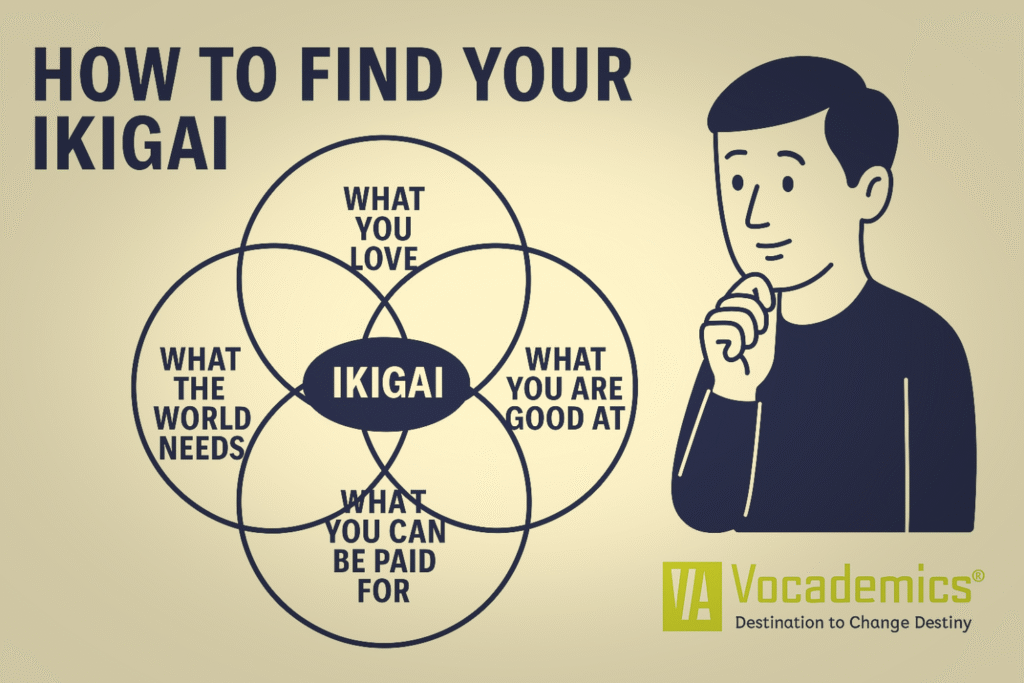
The Japanese concept of Ikigai (pronounced ee-kee-guy) helps you discover your “reason for being.” It brings together four key areas:

  1. What you love — Passion
  2. What you’re good at — Talent
  3. What the world needs — Purpose
  4. What you can be paid for — Profession

Where all four intersect, lies your Ikigai. For multi-talented individuals, this model doesn’t force you to pick one thing — it helps you spot patterns and overlaps.

“You may not need to narrow your interests, only to align them.”

Activity: Create your own 4-circle Ikigai chart and jot down points under each. You’ll begin to see which careers honor more of your identity.

🎮 Psychometric Mapping: Data-Driven Discovery

If you’re still unsure how to align your interests, let science lend a hand.

Psychometric career assessments (like those offered by Vocademics Career Counseling) measure:

  • Your personality type (MBTI, Holland Code)
  • Your interests, aptitude, and learning styles
  • Your workplace compatibility and decision patterns

Based on your profile, the platform suggests career clusters — roles that match who you are, not just what you scored.

“The best career advice doesn’t tell you what to become. It helps you understand who you already are.”

These tools help you convert self-awareness into strategy. Many students discover options they hadn’t even considered, but which are perfect for their inner wiring.

🌟 From Dr. Trilok’s Mentor Desk

“You don’t have to be one thing. But you must take one step. Clarity comes not from knowing everything, but from starting something.”

Don’t be afraid of starting in one direction. Careers are not trains; they’re rivers. You can branch, shift, and evolve.

What matters is that your first step is intentional, informed, and aligned with your evolving self.

✅ Action Point

Let the answers guide your next move — not forever, but for right now.

See you next Monday with another edition of Mentor Mondays: Career Wisdom with Dr. Trilok Sharma.

Read More
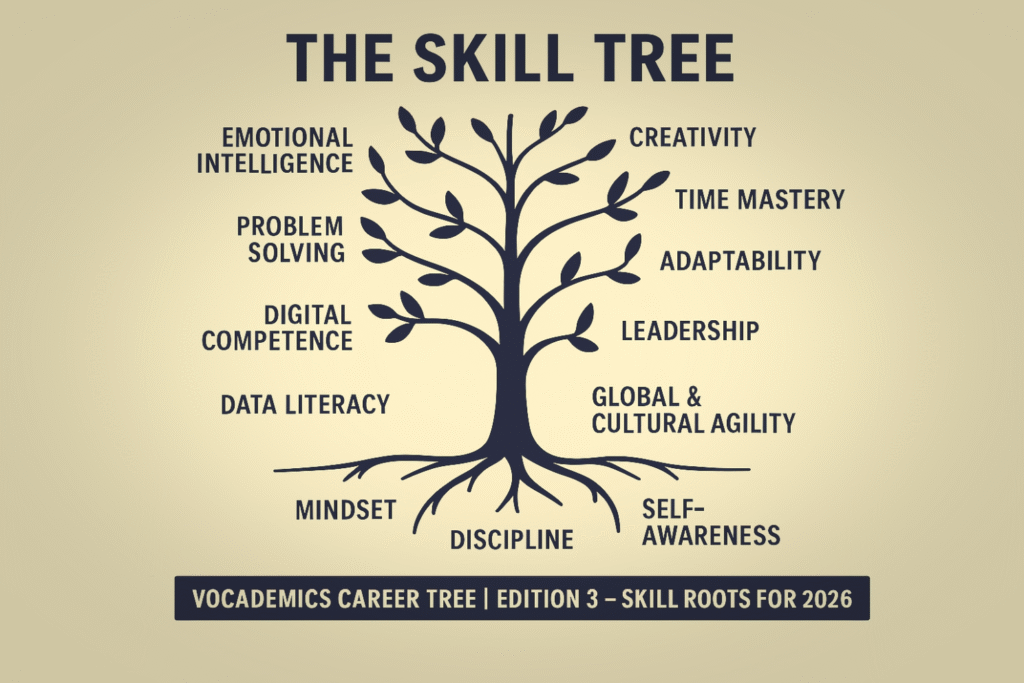
Top Skills Every Graduate Must Develop Before 2026

Top Skills Every Graduate Must Develop Before 2026

Welcome back to Mentor Mondays, where each week we decode the evolving world of careers, leadership, and lifelong learning.

After discussing the future of jobs and how to become market ready, it’s time to get specific. What exactly should students be learning right now to thrive in the careers of tomorrow?

Today, we uncover the Top 10 Skills every graduate should aim to build before 2026. These are not just buzzwords — these are practical competencies that employers worldwide are already prioritizing.

📊 1. Data Literacy

Understanding data, interpreting patterns, and making data-driven decisions is the new workplace currency.

Learn via:

  • Google Data Analytics (Coursera)
  • Microsoft Excel / Power BI basics

“Not everyone needs to be a data scientist. But everyone must be data-aware.”
💻 2. Digital Fluency

Comfort with navigating apps, platforms, and digital tools is essential, no matter your domain.

Learn via:

  • LinkedIn Learning: Digital Literacy
  • Learn Canva, Zoom, Miro, Slack, Trello

⚖️ 3. Critical Thinking & Problem Solving

The ability to evaluate information, spot issues, and generate solutions will never go out of style.

Practice through:

  • Case studies, debates, simulations
  • Competitions like hackathons or business games

🚀 4. Adaptability

Your job, tools, or even industry may change. Your success lies in how fast you can pivot.

Build it via:

  • Freelancing /internships in different sectors
  • Taking new responsibilities or volunteering

📰 5. Communication (Written & Spoken)

Can you express yourself clearly, confidently, and persuasively? That’s a must in every field.

Learn via:

  • Toastmasters or college clubs
  • Writing blogs, articles, or project summaries

“Your degree gets you noticed; your communication gets you remembered.”

🚪 6. Emotional Intelligence (EQ)

Understanding yourself and others builds leadership, teamwork, and empathy.

Build through:

  • Reflection exercises, journaling
  • Peer feedback, group work
  • Books: Emotional Intelligence by Daniel Goleman

🎓 7. Self-Management & Time Mastery

In hybrid or remote work cultures, self-driven individuals shine. Discipline is a differentiator.

Try:

  • Pomodoro Technique or calendar blocking
  • Using Notion, To do list, or Google Calendar

🎡 8. Creative Thinking & Innovation

Thinking differently is your ticket to standing out. It’s not just for artists.

Nurture with:

  • Design thinking workshops
  • Side projects, entrepreneurship cells
  • Books: Steal Like An Artist by Austin Kleon

📈 9. Tech Awareness (AI, Cloud, Cybersecurity Basics)

Every field is touched by tech. Even if you’re not a coder, you must understand the trends.

Learn via:

  • AI For Everyone (Andrew Ng – Coursera)
  • Basics of cloud storage, cybersecurity tips

✈️ 10. Global & Cultural Agility

In a borderless world, cross-cultural understanding is gold.

Build through:

  • MOOC collaborations
  • MUNs, student exchange, or following international mentors
  • Reading global reports (e.g., WEF, OECD)

“Tomorrow’s job interviews won’t just ask what you know. They’ll ask how fast you learned it and how well you applied it.”

🌟 From Dr. Trilok’s Mentor Desk

“The difference between employability and impact is your skillset. The difference between skill and success is your attitude.”

Make skill-building your daily ritual. One new habit, one new tool, or one new question a week is enough to future-proof your journey.

🚀 Action Point

Reflect on where you stand today:

  • Which 3 skills above do you already have?
  • Which 2 would you like to develop this month?

Set that goal and start small!

And if you’re still unsure about what suits you best, start with your own profile: 🔗www.vocademics.edumilestones.com for your complete psychometric mapping.

Read More
Becoming Market Ready: Skills, Mindset, and Mentoring for Career Success

Becoming Market Ready: Skills, Mindset, and Mentoring for Career Success

Welcome back to Mentor Mondays, your weekly insight into the evolving landscape of careers and leadership.

Last week, we explored the Top Trending Careers of 2030, from AgriTech to AI. This week, we focus on the question every student and professional must answer:

“How do I prepare myself to thrive in such a fast-changing world?”

Let’s talk about what it really means to be market ready, and how you can align your skills, mindset, and personality to build a career that’s not only secure but deeply fulfilling.

📚 What Does “Market Ready” Actually Mean?

Being market ready is not about chasing job titles or trending keywords. It means:

  • Knowing your strengths and interests
  • Possessing real-world, applicable skills
  • Demonstrating adaptability and critical thinking
  • Communicating your value with confidence and clarity

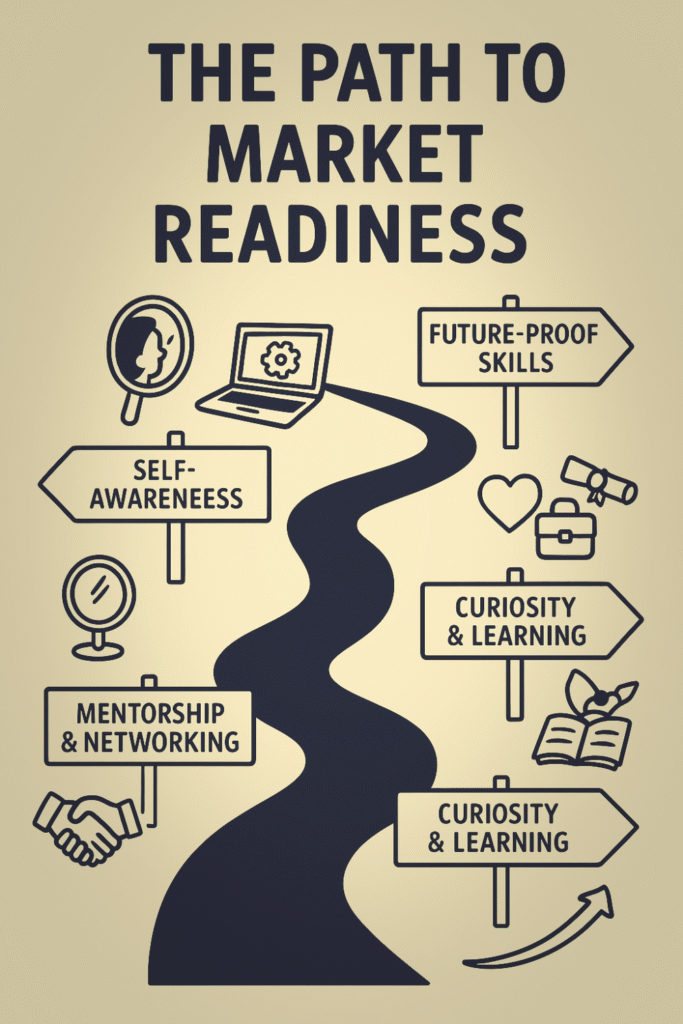
✅ Step 1: Start with Self-Awareness

Before exploring careers, explore yourself.

You need to ask:

  • What are my natural talents and abilities?
  • What kind of environments energize me?
  • Am I more of a creator, organizer, helper, or analyzer?

This is where psychometric assessment comes in. Through tools like Vocademics Career Counseling, you can:

  • Discover your personality type
  • Understand your aptitude & learning style
  • Identify career paths that match your strengths and preferences

“One-size-fits-all careers no longer exist. The future belongs to personalized professional paths.”

🎓 Step 2: Build Future-Proof Skills

Based on industry trends, here are the top skills employers want across sectors:

Technical Skills:

  • Data literacy and analytics
  • AI & machine learning fundamentals
  • Cybersecurity awareness
  • Coding or automation tools (even basic ones)

Soft Skills:

  • Communication & storytelling
  • Teamwork and empathy
  • Critical thinking & decision-making
  • Adaptability and self-motivation

How to Gain Them?

  • Online certifications (Coursera, Udemy, NPTEL)
  • Live projects, internships, and hackathons
  • Volunteering and extracurriculars

🔹 “Employability is no longer about your degree, but about the story your skills can tell.”

🌎 Step 3: Align Passion with Profession

A fulfilling career lies at the intersection of:

  • What you love (your passion)
  • What you’re good at (your skills)
  • What the world needs (market demand)
  • What you can be paid for (career viability)

This is the Japanese concept of Ikigai, and it’s as relevant today as ever.

Ask yourself:

  • Do I enjoy problem-solving or people interaction?
  • Am I excited by data, ideas, or visuals?
  • Would I enjoy working in labs, startups, schools, or outdoors?

Your answers help narrow down career clusters – from design and communication to tech and research.

🔬 Step 4: Stay Curious, Stay Current

The only constant in the job market is change. Make curiosity your best tool:

  • Follow industry leaders and read reports (WEF, LinkedIn, McKinsey)
  • Join relevant webinars and communities (on Discord, LinkedIn)
  • Subscribe to newsletters or YouTube channels in your interest area
  • Create a simple habit: learn one new thing each week

🎡 Step 5: Seek Mentorship and Practice Networking

In today’s world, guidance is not a luxury, it’s a necessity.

  • Reach out to professors, seniors, or professionals on LinkedIn
  • Join alumni groups, career communities, or online forums
  • Ask questions, request shadowing opportunities, and be open to learning

Remember: Mentors open doors that Google searches can’t.

“As a career coach and mentor, I’ve seen students transform by simply getting the right question asked at the right time.” — Dr. Trilok Sharma

🔄 Bonus: Build a Digital Portfolio

No matter your field, showcasing your work is powerful. Create:

  • A personal website or portfolio (Wix, WordPress, GitHub)
  • A resume that reflects real projects
  • A LinkedIn profile with keywords and recommendations

This acts as your 24/7 career ambassador in the digital world.

🌟 Final Thought from Dr. Trilok

“You don’t need to be the smartest in the room. You need to be the most prepared. The future will reward clarity, courage, and continuous learning.”

🚀 Ready to Begin?

Start your journey of self-awareness and career clarity today. Take your psychometric assessment with expert guidance: 🔗 https://www.vocademics.edumilestones.com

See you next Monday with another edition of Mentor Mondays: Career Wisdom with Dr. Trilok Sharma.

Read More
Future of Jobs

Future of Jobs: Top Trending Careers in 2030 You Need to Know

Welcome to the first edition of Mentor Mondays! I am Dr. Trilok Sharma — Professor, Corporate Consultant, Certified Career Analyst, and Author of The Corporate Hanuman. Through this weekly newsletter, I invite you to walk with me every Monday into the ever-changing world of careers, leadership, and corporate strategy. Our mission: to prepare minds, shape futures, and build market-ready talent.

This week, we explore what the job market may look like in 2030. With technologies advancing and industries transforming at record speed, it’s vital to understand where opportunities will emerge next. Let’s dive into the sectors and roles that will dominate the next five years.


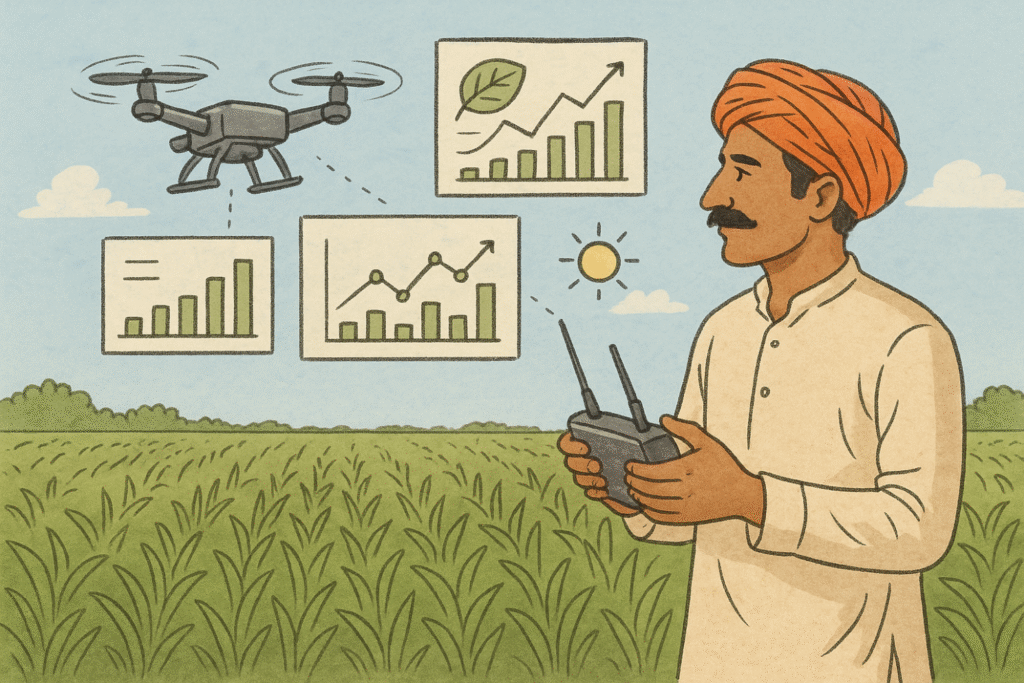
🌾 Agritech: Farming Meets Future

Agriculture is becoming smart. Drones, AI, and IoT are reshaping how we cultivate and distribute food. In countries like the U.S., less than 2% of the population farms with high-tech tools. India too is catching up with startups and cooperatives adopting precision farming.

Emerging Roles:

  • Agri-Data Analyst
  • IoT Field Technician
  • AI-powered Crop Manager

Key Skills:

  • Data literacy, basic coding
  • Agricultural science
  • Remote sensing tools

🌍 Space Tech: The Final Frontier of Careers

Space startups are growing fast. Earth observation, satellite data, and climate analytics are powering this expansion. India’s private space sector is already making headlines with satellite constellations for environmental intelligence.

Emerging Roles:

  • Remote Sensing Data Analyst
  • Satellite Operations Engineer
  • Climate-AI Analyst

Key Skills:

  • Python, GIS tools, Google Earth Engine
  • Satellite data processing

🎒 Pharma: Where AI Meets Medicine

The pandemic fast-tracked biotech innovation. AI and machine learning are streamlining clinical trials, speeding up drug discovery, and personalizing medicine. India remains a global hub for both generics and bio-pharma.

Emerging Roles:

  • Pharma Data Scientist
  • Bioinformatics Specialist
  • Digital Health Regulatory Expert

Key Skills:

  • ML, data modeling
  • Genomics, drug development workflows

📦 Manufacturing: Smart Factories, Smarter Jobs

Factories are becoming smarter with automation, predictive maintenance, and robotics. Think Tesla’s Optimus robots and IoT-enabled production lines.

Emerging Roles:

  • Robotics Engineer
  • Supply Chain Data Analyst
  • Sustainability Engineer

Key Skills:

  • Industrial IoT, AI, Six Sigma
  • Lean systems and sustainability frameworks

💰 Banking & Fintech: Personalized, Digital, Secure

Banking is going digital. AI is now used for personalization, fraud detection, and customer insights. The future banker will be a hybrid of coder, data analyst, and customer strategist.

Emerging Roles:

  • Fintech Product Manager
  • Cybersecurity & Risk Analyst
  • Data Engineer (Banking)

Key Skills:

  • Fintech platforms, UI/UX
  • Regulatory tech, blockchain basics

🤖 Technology: Rise of AI, Automation, and New Ethics

AI won’t just power future jobs—it will be your co-worker. From generating code to optimizing business processes, AI will become the core driver of innovation across sectors.

Emerging Roles:

  • Chief AI Officer
  • AI Ethics Consultant
  • Machine Learning Engineer

Key Skills:

  • AI/ML, NLP, cloud computing
  • Ethical frameworks and algorithm auditing

🚗 Auto Sector: From Fuel to Code

EVs, autonomous vehicles, and connected tech are revolutionizing mobility. The auto industry now hires more software engineers than mechanical ones.

Emerging Roles:

  • EV Systems Engineer
  • Automotive Software Developer
  • Vehicle Cybersecurity Expert

Key Skills:

  • Embedded systems, AI, cybersecurity
  • Battery systems and digital twin tech

🍴 FMCG & E-Commerce: AI Meets Everyday Life

Consumer goods are getting smart. AI vision sorts pickles, predictive analytics boosts sales, and omnichannel experiences redefine shopping.

Emerging Roles:

  • Channel Strategy Manager
  • Automation Project Engineer
  • Digital Experience Architect

Key Skills:

  • Retail analytics, e-commerce UX, IoT
  • Sustainable operations and marketing tech

🎯 Closing Thought from Dr. Trilok

“The careers of 2030 will belong to those who are willing to learn, unlearn, and relearn. The world doesn’t need just degrees—it needs adaptability, curiosity, and real-world skills.”


⏰ Coming Up Next Week:

Edition 2: Becoming Market Ready How students and professionals can align their personality, passion, and skills to stay ahead in tomorrow’s job market.

Until then, explore your strengths through psychometric career guidance at: 🔗 https://www.vocademics.edumilestones.com

Read More
https://mediumaquamarine-wren-289273.hostingersite.com/

Managing Everyone in the Office through Astrology: The Zodiac as a Team-Building Tool

What if I told you that understanding the people in your office could be as simple as knowing their birthdate?

While it might sound unorthodox in an era of AI dashboards and KPIs, I’ve recently revisited a rather unconventional but fascinating lens on workplace dynamics — astrology. Drawing inspiration from the book Zodiac Manager: An Astrological Exposé of Everyone in the Office by J.T. Ford, I couldn’t help but reflect on how this age-old system of sun signs can be powerfully blended with modern management principles like emotional intelligence, team dynamics, leadership development, and even performance optimization.

Before you dismiss this as pseudoscience, allow me to clarify — I’m not suggesting we replace psychometric tests or HR analytics. But what I do propose is this: when you view your team through the lens of zodiac archetypes, it offers a refreshing and sometimes shockingly accurate framework to understand personalities. It allows us, as managers, to engage people where they are — not where we assume them to be.

Take the example of an Aries employee. High on energy and initiative, they’re your “first responders” to any crisis or new opportunity. Aries wants action and visibility — and they want it now. Give them a leadership title, a new venture, or an aggressive target — and they’ll blaze a trail through it. But try to micromanage them, and you’ll hit a wall. That’s where emotional intelligence comes in — you motivate Aries by offering freedom and recognition, not by tying them down.

Now contrast that with a Taurus, the slow-and-steady soul who thrives on stability and trust. Taurus may not dazzle you with immediate brilliance, but they will build systems, profits, and processes that last. Give them ownership, respect their pace, and never rush their decision-making — and they’ll reward you with loyalty and long-term gains.

Similarly, Geminis are the quick-thinking communicators in your office. Put them in charge of marketing copy, client relationships, brainstorming sessions — they will thrive. Just don’t bury them under repetitive tasks or rigid workflows. They need novelty to perform. This is where structured flexibility — a key pillar of modern agile teams — becomes your best friend.

Then comes the deeply emotional and nurturing Cancer. At first, they may seem shy or overly sensitive. But don’t underestimate them — they are often the emotional glue of your team. Cancers care, genuinely. Let them spearhead mentorship programs or employee engagement drives. Just be gentle with criticism — they take feedback to heart more than others.

The Leo in your team? They live for the spotlight. They want to lead, be admired, and make a big splash. When aligned with the team’s goals, their charisma can uplift everyone. Use their flair in client presentations, launches, or team celebrations. Feed their pride with appreciation, and they’ll roar in your support.

In contrast, the Virgo is your system guardian. Detail-oriented, process-loving, and often the unsung hero of quality assurance. They’ll spot errors, streamline processes, and polish projects to perfection. But remember — they can be their own harshest critics. Help them see the bigger picture and recognize their own worth beyond flaws.

With Libras, diplomacy is their superpower. They abhor conflict and thrive in aesthetically pleasing, emotionally balanced environments. Libras make excellent mediators, team coaches, and HR liaisons. They need harmony to flourish — so don’t throw them into chaotic work cultures without support.

Now, Scorpio. Oh, what depth they bring! Intense, private, strategic — Scorpios are the detectives and silent achievers of the workplace. They don’t trust easily, but once loyalty is earned, they’ll fight your battles like no other. Respect their space, engage their intellect, and give them real challenges — they’ll exceed your expectations (and quietly study your motives too!).

Sagittarians bring fire, freedom, and fearless ideation. They’re philosophical adventurers — your resident explorers. Want someone to open new markets or try bold experiments? Hand it to a Sag. But box them into bureaucracy, and they’ll vanish in spirit even before the resignation lands on your desk.

Capricorns are the builders. Ambitious, calculated, and highly disciplined. They climb the ladder not by flash, but by focus. They value structure and reward. Help them plot career paths, recognize merit fairly, and assign them strategic projects — and they’ll climb while lifting others along.

Aquarians are rebels with a cause. Innovators. Outliers. They’ll challenge norms and build what hasn’t been built yet. The trick? Give them autonomy and invite their vision in strategy discussions. They may not be your routine task-finishers, but they will shape the future of your company if you listen.

Finally, the Pisces — emotional, imaginative, and deeply intuitive. Often misunderstood, but powerfully connected to the human side of work. Empathetic listeners, they make excellent counselors, designers, and client-facing professionals. Just ensure a safe, emotionally affirming environment where their creativity isn’t crushed under cold data.

Now, imagine harnessing this insight in performance reviews, task assignments, or even seating arrangements. Pair your Aries and Leo for high-energy campaigns. Let Virgo organize while Gemini pitches. Give Aquarius room to invent and Taurus the mandate to stabilize.

The takeaway is simple: The workplace is a constellation of personalities, and managing effectively means customizing your leadership constellation. Whether you believe in astrology or not, understanding personality patterns — be it through psychometrics or planets — helps you lead with empathy, adaptability, and clarity.

I’m not suggesting you ask birth charts in interviews. But a casual “What’s your sign?” at the watercooler might open a doorway into understanding your team a little better — and in management, every insight counts.

After all, we’re not just managing KPIs and calendars. We’re managing people — and sometimes, their stars.
Read More