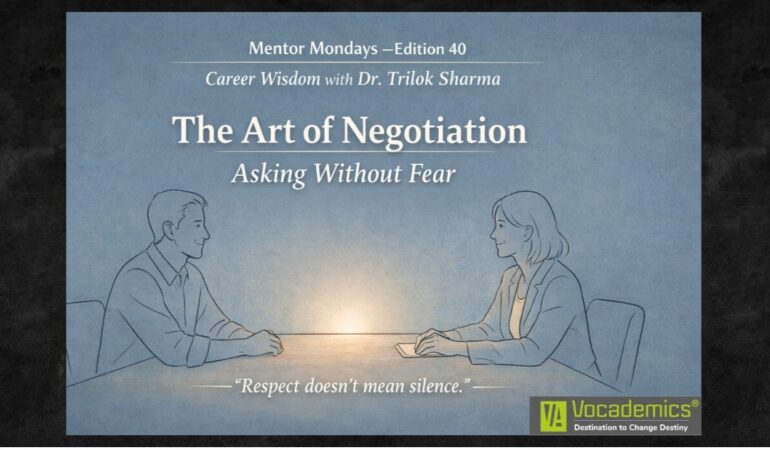
The Art of Negotiation: Asking Without Fear

The Art of Negotiation: Asking Without Fear

There is a silent myth many professionals carry:

“If I ask, I might look greedy.” “If I negotiate, I might lose respect.” “If I push, I might damage the relationship.”

Article content

So we stay quiet, and then we feel undervalued.

Negotiation is not confrontation – It is clarification.

It is the courage to say: “Here is the value I bring. Let’s discuss alignment.”

I have seen brilliant students hesitate to negotiate internships. Talented executives avoid discussing compensation. Entrepreneurs underprice their work because they fear appearing “too much.”

But here is the truth:

👉 If you don’t define your value, the market will discount it.

Negotiation is not about winning over someone. It is about creating a win-win with dignity.

🧠 The 4 Principles of Asking Without Fear

1. Prepare, don’t improvise. Confidence comes from data, not emotion.

2. Separate ego from outcome. It’s a discussion — not a war.

Article content

3. Anchor with value, not demand. Say: “Based on the responsibilities and impact…” Not: “I deserve more.”

4. Be willing to walk — politely. Silence after a reasonable ask is powerful.

Article content

The irony?

The people who negotiate respectfully are often respected more. Because clarity builds trust.

Silence builds assumptions.

This week, reflect:

When did you negotiate — and win? Not just money : Time. Role clarity. Boundaries. Even expectations at home.

Negotiation is not loud, it is intentional.

And remember —

Respect doesn’t mean silence. It means honest dialogue.

Article content

If this resonated, share it with someone who needs the courage to ask.

And if you are guiding a student or professional through career decisions, structured clarity makes negotiation easier.

🔗 Career mentoring support: https://vocademics.edumilestones.com
Read More
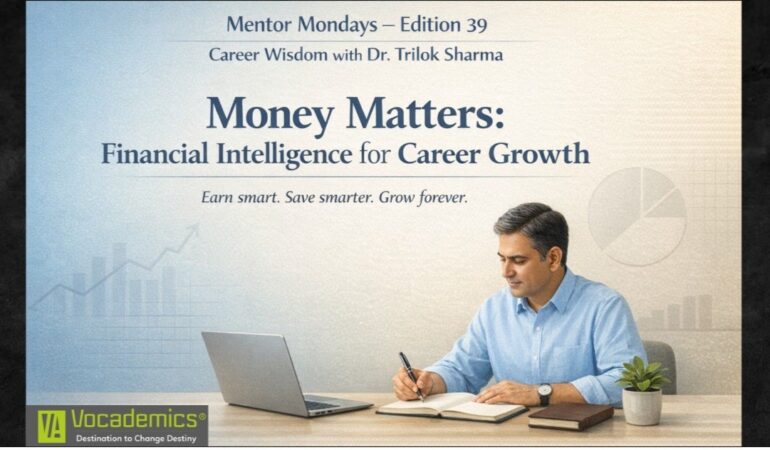
Money Matters: Financial Intelligence for Career Growth

Money Matters: Financial Intelligence for Career Growth

“Earn smart – Save smarter – Grow forever.”

We talk about career growth.

We talk about promotions. We talk about skills.

But rarely do we talk about financial intelligence.

And that’s a silent mistake.

Because income alone does not build security. Financial behavior does.

Many professionals earn well… but feel stuck. Stressed. Dependent on the next salary credit.

That’s not growth. That’s survival with better packaging.

Article content

🧠 1. Income Is Important. But Structure Is Power.

A salary is cash flow. Financial intelligence is control.

Ask yourself:

  • Do I know where my money goes every month?
  • Do I have 6 months of emergency cushion?
  • Am I investing — or only saving?

Career growth without financial structure creates pressure. Financial structure creates options.

And options create confidence.

Article content

💼 2. Early Career Mistake: Lifestyle Upgrade Before Asset Creation

The first salary hike often brings:

  • New phone
  • Better car
  • Bigger EMI
  • Higher lifestyle

Nothing wrong with comfort. But comfort without capital becomes a trap.

Before upgrading lifestyle, upgrade:

  • Emergency fund
  • Insurance cover
  • Investment discipline

Freedom is not in spending more. It is in needing less.

📊 3. Your Career Is an Asset. Treat It Like One.

Financial intelligence is not only about SIPs and mutual funds.

It is also about:

  • Investing in skills
  • Investing in health
  • Investing in reputation
  • Building multiple income streams

Upskilling is financial strategy. Networking is financial strategy. Credibility is financial strategy.

When your career compounds, money follows.

Article content

💰 4. Money Anxiety vs Money Awareness

Many professionals fear money conversations.

But ignorance creates anxiety. Clarity creates calm.

Start small:

  • Track expenses for 90 days
  • Understand tax structure
  • Automate investments
  • Separate wants from goals

Financial literacy reduces emotional pressure at work.

And a calm professional makes better decisions.

Article content

🚀 5. Financial Intelligence = Career Leverage

When you have savings: You negotiate better. You take calculated risks. You refuse toxic roles. You choose growth over desperation.

Money gives dignity. Financial intelligence gives direction.

Final Reflection

Career growth is not only about earning more. It is about building a life where money supports purpose — not controls it.

So let me ask you:

👉 What’s your biggest financial learning so far?

Let’s build wealth with wisdom.

Read More
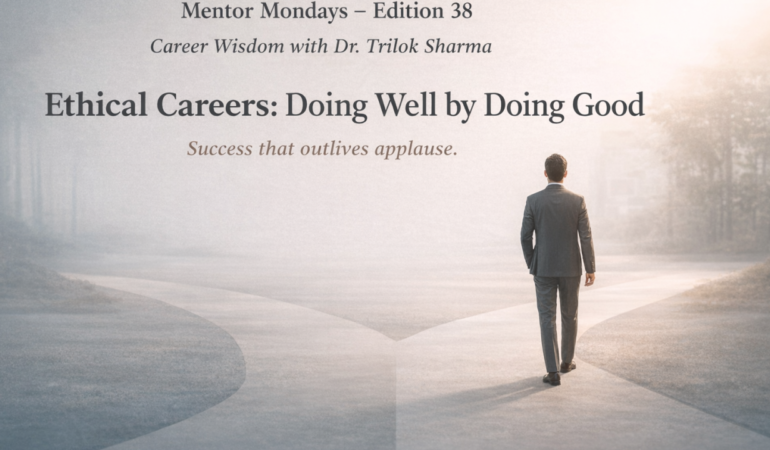
Ethical Careers: Doing Well by Doing Good

Ethical Careers: Doing Well by Doing Good

Success that outlives applause.

Article content

There comes a quiet moment in every career.

Not during interviews….Not during promotions. But somewhere in between — when a tempting shortcut appears perfectly justified.

The numbers make sense….The logic is convenient….The compromise feels harmless.

And yet, that moment decides far more than the outcome of a deal. It decides the direction of a career.

Ethical careers are often misunderstood as cautious or slow. In reality, they are not about rejecting ambition — they are about refusing to disconnect ambition from values.

Many professionals chase speed early on. A few choose alignment. The difference shows up later.

Why Ethics Isn’t a Soft Skill

Article content

Careers rarely derail because of incompetence. They derail when values quietly become optional.

Skills can be replaced. Credentials can be updated. But once trust is diluted, rebuilding it takes far longer than earning it did.

Over time, ethical choices compound into three forms of trust that no resume can list:

  • Trust of colleagues, who know where you stand
  • Trust of clients, who rely on consistency, not charisma
  • Trust of self, which brings clarity at the end of demanding days

This inner alignment is not idealism, it is professional sustainability.

When Applause Fades

Recognition is temporary by design. Markets change. Organizations restructure. Titles move on.

What remains employable — long after applause fades — is character.

Character opens doors when credentials are similar. It repairs bridges when mistakes occur. It steadies professionals during transitions, downturns, and reinvention.

In volatile careers, integrity becomes the most underrated asset.

A Lived Moment from the Field (Anonymized)

A few years ago, I worked closely with a mid-career professional—highly competent, widely trusted, and on the verge of a significant leadership role.

At a critical moment, he was informally encouraged to soften certain disclosures in a report. Nothing illegal… Nothing dramatic… Just enough ambiguity to keep stakeholders comfortable and timelines intact.

Saying yes would have accelerated his ascent. Saying no would quietly slow it down.

He chose clarity over convenience. The immediate consequence was disappointing: the role went to someone else.

What followed, however, was telling.

Within a year, during a period of organizational churn, that same professional was approached—unsolicited—for a far more responsibility-heavy role. The reason cited was not his technical brilliance, but a simple sentence from the leadership table:

“We know where he draws the line. That’s exactly who we want in uncertainty.”

Careers don’t always reward ethical choices immediately. But they remember them precisely when it matters most.

Article content

The Ethical Growth Paradox

Careers built on integrity often start slower.  They say “no” more often. They wait when others rush.

But over time, they grow stronger — not louder.

The paradox is simple: What feels like restraint in the short term becomes credibility in the long term.

Fast rises without ethical grounding collapse easily…Steady growth anchored in values endures pressure.

A Mentor’s Reflection

Ethical careers are not about perfection, they are about direction.

Article content

Every professional faces ethical crossroads.  The question is not whether temptation will appear — but whether your values are clear before it does.

The professionals who leave lasting impact are not those who avoided tough choices. They are the ones who chose their values over convenience, repeatedly — even when no one was watching.

Your Turn to Reflect

Before the next opportunity tests you, pause and ask:

What is one ethical line you would never cross for growth?

Write it down.  Make it explicit. Protect it.

Clarity about values is not restrictive — it is liberating.

It removes the burden of deciding who you are in moments that demand speed.

This is Mentor Mondays – Edition 38, part of Career Wisdom with Dr. Trilok Sharma. Join us every Monday for reflections that help you build a career of substance, not just success.

Read More
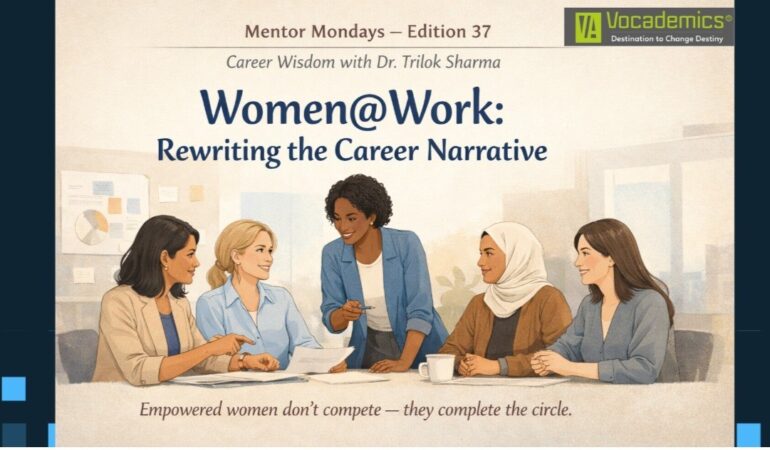
Women@Work: Rewriting the Career Narrative

Women@Work: Rewriting the Career Narrative

Welcome to this edition of Mentor Mondays, where we explore how modern careers are evolving. Today’s focus is not about women fitting in—but about how they are reframing what success at work truly means.

Article content

From Fitting In to Reframing

For decades, women at work were expected to adapt to systems designed without their voices. To fit in. To conform. To adjust.

Today, they are being heard—not for how well they adapt, but for how they reframe. For the perspectives, judgment, and depth they bring to teams, decisions, and leadership.

This is not a small adjustment. It is a fundamental reimagining of workplace excellence.

Beyond “Catching Up”

The real shift isn’t about women catching up. It’s about organizations realizing that careers grow stronger when different strengths coexist.

Progress does not require identical paths or identical styles. It requires respect for diversity in thinking, leading, and contributing.

Different approaches don’t dilute excellence. They define it.

What Women Bring to Work

At work, women bring more than skill.

They bring context, continuity, and conscience.

  • Context — seeing the bigger picture beyond immediate tasks
  • Continuity — building systems and relationships that last
  • Conscience — leading with values, ethics, and responsibility

These are not soft skills. They are strategic advantages.

A Different Kind of Leadership

Not louder leadership— but listening leadership.

Not lone-wolf ambition— but collective progress.

Women are demonstrating that leadership can prioritize understanding over visibility, collaboration over competition, and shared success over solo victories.

Completion, Not Competition

The most successful workplaces I observe don’t celebrate competition among women. They cultivate completion—where experience meets empathy, ambition meets balance, and success is shared, not snatched.

Article content

Competition asks, “How do I win?” Completion asks, “How do we all grow?”

That distinction changes cultures.

Why This Matters—for Everyone

When women grow, teams stabilize. Decisions humanize. Work cultures mature.

This isn’t a women’s issue. It’s a workplace wisdom issue.

Mentor’s Note

Progress isn’t about replacing one dominant voice with another. It’s about expanding the conversation.

The most meaningful transformations happen when more voices are heard, more experiences matter, and success is defined broadly—not narrowly.

When we expand the conversation, we don’t reduce anyone’s space. We increase everyone’s potential.

Your Turn

Tag a woman who inspires your career journey.

A mentor. A colleague. A leader. Or a quiet supporter who steadied your path.

Let’s acknowledge the women who helped us grow—and the wisdom we now carry forward.

This is Mentor Mondays: Career Wisdom with Dr. Trilok Sharma. Every Monday, we explore careers with clarity, purpose, and perspective.

Read More
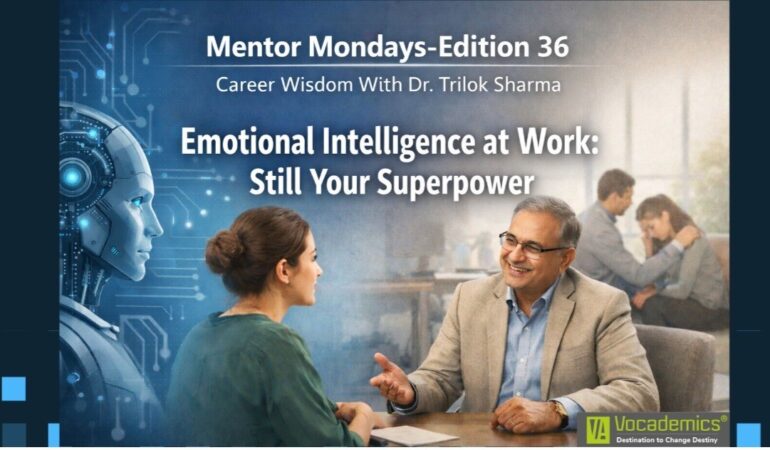
Emotional Intelligence at Work: Still Your Superpower

Emotional Intelligence at Work: Still Your Superpower

Tagline: “AI can compute, but can it care?

”Hook: When did empathy make your job easier?

The Quiet Skill That Loudly Wins Careers

Every few months, a new tool arrives. Every year, a new skill trend dominates LinkedIn.

But one capability has survived every disruption—from spreadsheets to smartphones, from automation to artificial intelligence.

That skill is Emotional Intelligence (EI).

AI can analyze patterns. AI can predict outcomes. AI can optimize decisions.

Article content

But AI cannot sit across a stressed colleague and say, “I understand.”

And that still matters—more than ever.

💡 What Emotional Intelligence Really Looks Like at Work

EI is not about being soft. It’s about being aware, grounded, and human in real situations.

At work, it quietly shows up as:

  • Pausing before reacting to a difficult email
  • Reading the room before speaking in a meeting
  • Managing your own stress instead of spreading it
  • Giving feedback that corrects without crushing

People with strong EI don’t avoid pressure. They absorb it without leaking it onto others.

🤖 Why EI Is Becoming More Valuable in the AI Era

Article content

As machines take over tasks, humans are left with relationships.

What’s rising in importance:

  • Trust
  • Collaboration
  • Conflict handling
  • Psychological safety
  • Leadership presence

Ironically, the more intelligent machines become, the more human workplaces need humans to be.

🧩 EI Is Not a Personality Trait — It’s a Practice

You don’t need to be an extrovert. You don’t need to be “emotionally expressive.”

Article content

You just need three habits:

  1. Self-awareness – knowing what you’re feeling before it controls you
  2. Self-regulation – choosing response over reaction
  3. Social awareness – understanding what others might be carrying

EI grows quietly—through reflection, feedback, and lived experience.

🎯 The Career Advantage No Tool Can Replace

Skills may get you shortlisted. Experience may get you hired.

But emotional intelligence gets you trusted, followed, and remembered.

And careers are built on trust— not just talent.

🧠 We should not forget that

Care builds trust…Trust builds teams. And teams—not tools—build careers.

Article content

👉 Mentor Reflection

Before you scroll on, pause and reflect:

When did empathy—yours or someone else’s—make work easier for you?

That moment is your proof. EI isn’t outdated. It’s undefeated.

Read More
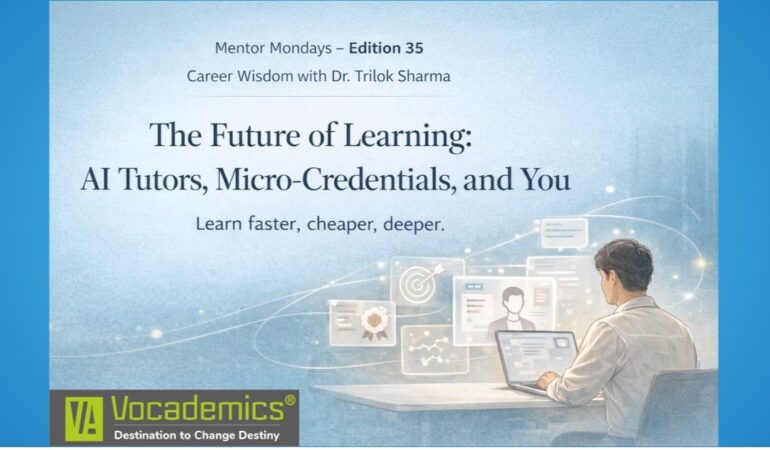
The Future of Learning: AI Tutors, Micro-Credentials, and You

The Future of Learning: AI Tutors, Micro-Credentials, and You

Learn faster, cheaper, deeper

Article content

When Learning Stopped Waiting for Classrooms

There was a time when learning meant one thing: fixed schedules, expensive programs, and long waiting periods before results showed up.

That time is quietly ending.

Today, learning fits into lunch breaks, late nights, and curious weekends. It adapts to you—your pace, your gaps, your goals.

AI tutors don’t replace teachers. They remove friction.

And micro-credentials don’t weaken education. They sharpen it.

Your AI Tutor Is Not Coming. It’s Already Here.

Imagine learning without embarrassment. Without waiting for the “right time” to ask a question.

Article content

AI-powered tutors do three things remarkably well:

  • They adjust when you struggle
  • They accelerate when you’re ready
  • They repeat patiently without judgment

This isn’t about machines teaching humans. It’s about learning becoming responsive instead of rigid.

That alone changes the game.

Why Micro-Credentials Are Quietly Winning

Article content

Traditional degrees still matter. But they no longer carry monopoly power.

Micro-credentials work because they answer one honest question employers ask today:

“Can you do this job—now?”

Short, focused certifications allow professionals to stack skills instead of waiting years to prove relevance.

Think less one long tunnel and more multiple open doors.

The smartest careers today are modular.

What AI Gets Right About How Humans Learn

Good learning has always been personal. Technology finally made that scalable.

AI-enabled platforms succeed because they mirror how the brain works:

  • Learning in small loops
  • Revisiting concepts at the right time
  • Adapting content instead of forcing pace

Traditional education was standardized for institutions. Modern learning is optimized for retention and application.

That difference shows up in results.

Cost, Time, and Return: The Honest Comparison

When you compare:

  • years vs months
  • tens of lakhs vs manageable investments
  • theory vs job-ready skills

…the shift becomes obvious.

The question is no longer “Is this legitimate learning?” The real question is:

“Is my learning still aligned with today’s reality?”

What This Means for Your Career (No Buzzwords)

1. Learning is now lifelong—by design, not fear Skills age faster. Awareness must refresh sooner.

2. Your profile matters more than your pedigree What you can do is visible. Excuses are not.

3. Career pivots are finally realistic Switching paths no longer demands restarting life.

That’s not disruption. That’s access.

A Simple Action Plan (Please Don’t Overthink This)

  • Identify one skill gap
  • Choose one platform
  • Set one small daily goal
  • Share progress—quietly, honestly

Momentum beats motivation.

The Mentor’s Bottom Line

The future of learning is not dramatic. It’s practical.

Article content

AI tutors are normalizing personalized education. Micro-credentials are redistributing opportunity. And learners who act early gain confidence—not anxiety.

This moment doesn’t reward those who wait for certainty. It rewards those who start imperfectly.

CTA / Conversation Starter

Which learning platform changed your skill game? A course, a credential, an AI tool—share what actually worked for you.

Your comment might be the nudge someone else needs.

Read More

Personal Brand 2.0: Beyond LinkedIn

Tagline: Your story is your strategy.

Hook: What 3 words describe your personal brand

When Personal Branding Became Too Loud

Article content

Somewhere along the way, personal branding got confused with posting frequency, polished headlines, and algorithm-friendly confidence.

That version looks good on screens. But it collapses in real conversations.

Because real personal brands don’t perform. They hold up—especially when decisions are difficult.

Where Personal Brand 2.0 Starts: One Shift

Article content

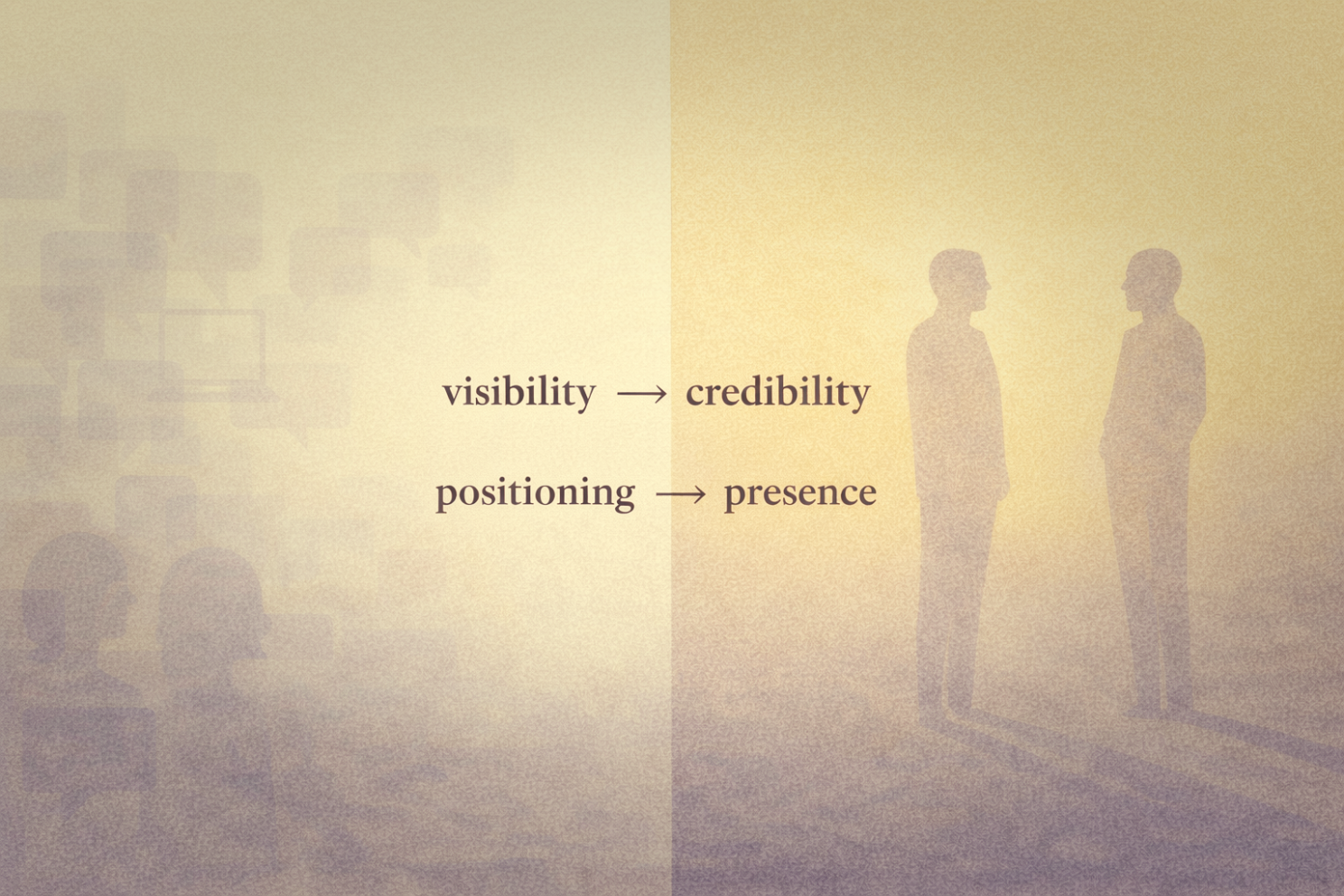
From visibility → to credibility From positioning → to presence

You don’t need to be everywhere. You need to be remembered correctly.

The strongest personal brands reveal themselves when people say things like:

“Talk to this person before you decide.”

That sentence is not marketing. It is reputation.

The Quiet Architecture of a Strong Personal Brand

1️⃣ A Lived Story, Not a Crafted Bio

Your story works when it explains why you advise—not what you do.

Article content

People trust those who have seen different sides of the system: education, organizations, leadership, success, failure, pressure, and responsibility.

Not because such journeys are impressive, but because they bring perspective—without panic.

A good story doesn’t shout experience. It normalizes wisdom.

2️⃣ Behaviour That Matches Belief

A personal brand is audited daily through small moments:

  • how you listen before responding
  • how you resist giving instant answers
  • how you stay calm when others rush

People may forget your designation. They remember how safe it felt to think clearly around you.

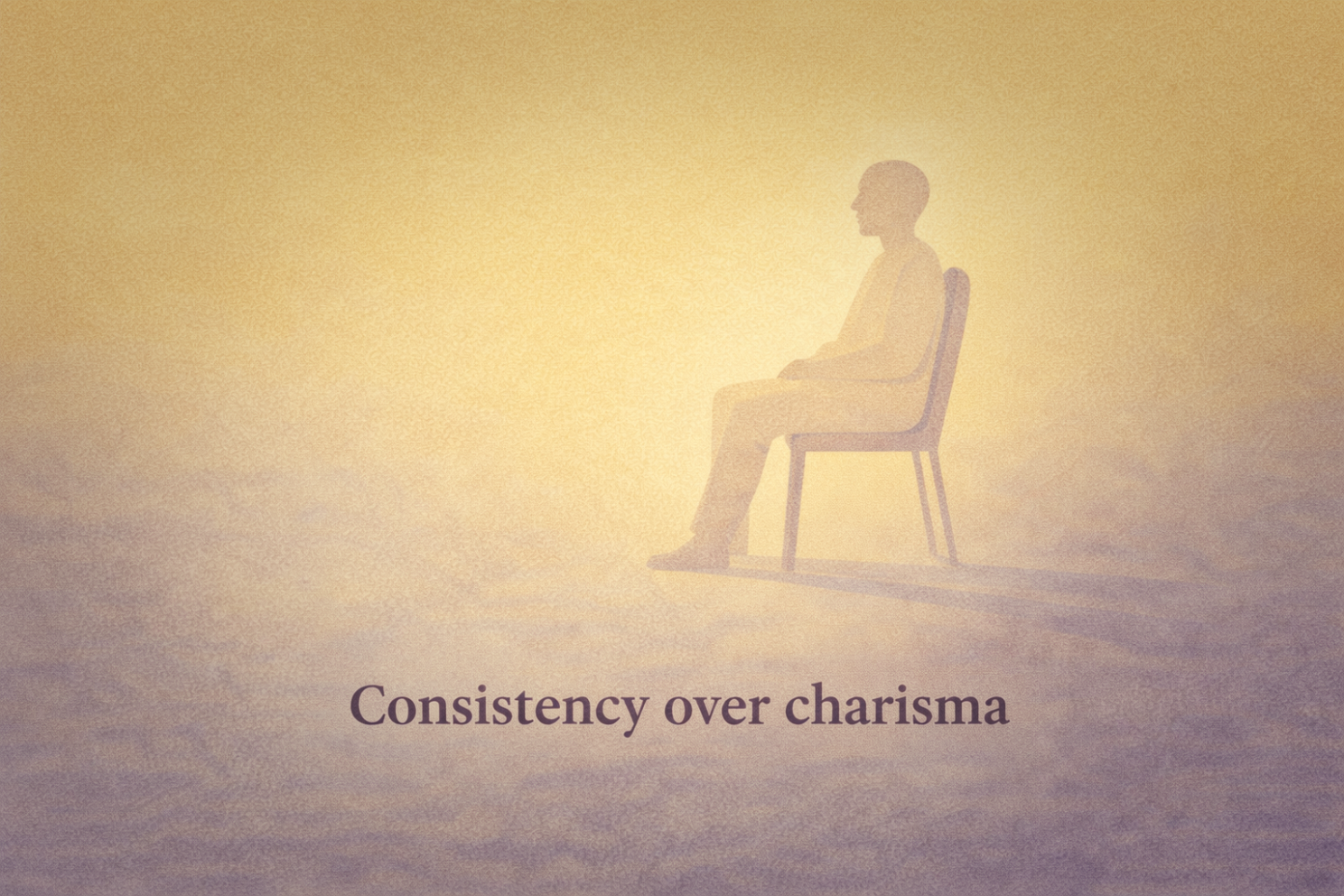
Consistency beats charisma—quietly, every time.

3️⃣ A Clear Value Signature

Ask yourself:

What do people come to me for when they are confused, tired, or stuck?

Not for motivation. Not for shortcuts. But for clarity.

People who genuinely help others tend to do three things well:

  • slow things down before big decisions
  • separate noise from signal
  • choose responsibly, rather than react emotionally

When this becomes your signature, referrals don’t need explanations.

Article content

Platforms Are Tools. Depth Is the Brand.

LinkedIn has a role—but a limited one.

It works best as a proof-of-life space, a credibility marker, a place for reflective thought—not continuous output.

The most resilient personal brands invest more energy offline:

closed-room discussions, classrooms, boardrooms, parent interactions, mentoring conversations, and lived influence.

One meaningful room can do what fifty posts cannot.

The 3-Word Test (Try This Honestly)

If someone had to describe you after a real conversation, what would they say?

Not aspirational words. Not fashionable ones. Just true ones.

The strongest brands often come down to qualities like: grounded, integrative, trustworthy.

They don’t trend—but they endure.

Why Personal Brand 2.0 Matters Now

Careers are no longer linear. Titles change faster than identities.

In such times:

  • Degrees open doors
  • Skills create entry
  • Personal brand determines longevity

Your reputation often arrives before your résumé.

Long after profiles are forgotten, the decisions influenced by you remain.

Reflection

Don’t build a personal brand. Live one—purposely.

Your story is already speaking. Your behaviour is already signaling. Your worth is already visible.

The real work is alignment.

CTA

If you’re at a crossroads in your career, navigating a leadership transition, or unsure about your next professional direction, explore clarity-driven mentoring and career guidance here: 🔗 https://vocademics.edumilestones.com

Read More
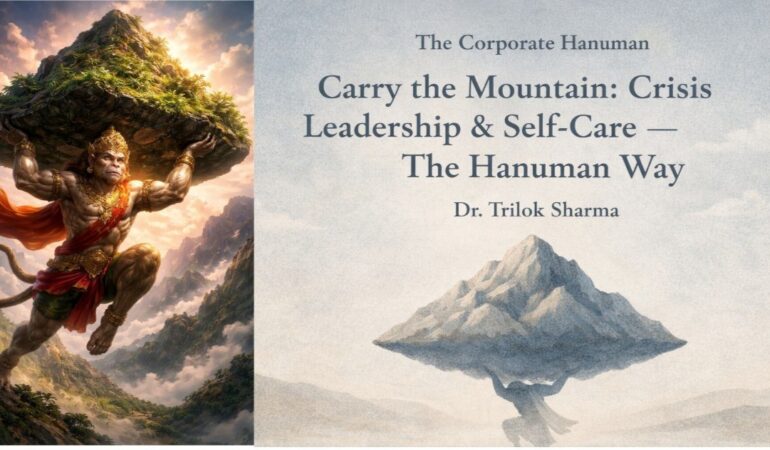
Carry the Mountain: Crisis Leadership & Self-Care — The Hanuman Way

Carry the Mountain: Crisis Leadership & Self-Care — The Hanuman Way

Six months is a long silence.

In this time, teams burned out, markets turned volatile, and “crisis” became a weekly visitor. Even I paused—because even mentors need their own Sanjeevani.

But today, I’m back with a story every modern leader needs.

The Sanjeevani Moment (and why it matters today)

When Lakshman fell on the battlefield, the only cure was the Sanjeevani herb on Dronagiri mountain.

Hanuman reached the mountain… but couldn’t identify the right herb quickly.

So he did something unforgettable: he carried the entire mountain.

And the Hanuman Chalisa captures it:

“Lāyā sañjīvan Lakhan jiyāye, Śrī Raghubīr harashi ura lāye.” You brought the life-giving Sanjeevani and revived Lakshman; Lord Rama embraced you with joy.

The leadership truth:

In high-stake moments, indecision is also a decision.

Article content
Decision Before Paralysis

Here are the mountain-lessons for today’s leaders:

1) Act decisively: progress over perfection

Crisis rarely gives perfect information. Set deadlines. Move with “enough clarity,” then correct the course.

2) Communicate truthfully: trust is the real currency

Say what you know. Admit what you don’t. Share what happens next. Silence creates speculation.

Article content
Trust and Transparent Communication

3) Put people and values before procedures

Policies don’t inspire loyalty. Values do. In chaos, people remember whether leadership cared.

Article content
People and Values Before Processes

4) Lead with positivity and empathy

A leader sets the emotional climate. Calm + compassion = resilience.

5) Prepare and learn

Crisis-proofing isn’t about panic. It’s about practice: roles, escalation paths, post-crisis learning.

6) Don’t forget yourself

Article content
The Leader Also Needs Sanjeevani

Leaders also need Sanjeevani. Self-care is not selfish; it’s leadership discipline.

The Sanjeevani Strategy (simple weekly application)

  • Make one decision you’ve been delaying
  • Communicate one hard truth with calm clarity
  • Reduce one unnecessary load on your team
  • Encourage one person who is silently struggling
  • Protect one personal boundary this week

Closing thought

Hanuman didn’t lift a mountain to show strength. He lifted it to save a life.

Leadership is not measured by the mountains we climb alone— but by the lives we lift together.

What “mountain” are you carrying right now?

Read More
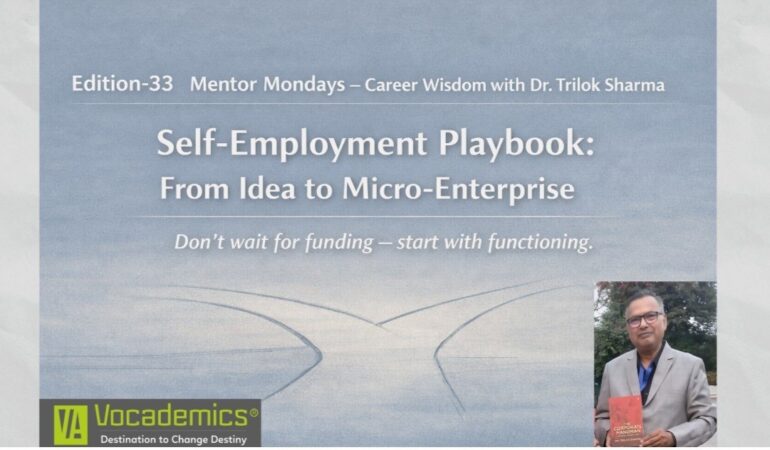
Self-Employment Playbook: From Idea to Micro-Enterprise

Self-Employment Playbook: From Idea to Micro-Enterprise

Tagline: Don’t wait for funding — start with functioning.

Hook: Would you prefer being a job seeker or a job creator?

Opening Reflection

Across classrooms, boardrooms, and career counselling sessions, one pattern keeps returning. Many capable people are waiting for the “right opportunity” to arrive, while small, workable opportunities pass them by every day. Careers rarely stall due to lack of talent. They stall due to hesitation to begin.

Article content
Waiting vs Beginning

Core Insight

Self-employment is often misunderstood. It is not about dramatic startups, venture capital, or overnight success. In reality, self-employment usually begins quietly. One skill. One customer. One invoice.

A micro-enterprise is simply structured self-reliance. It is built on usefulness, not hype. The goal is not scale at the start, but stability. Functioning comes first. Expansion follows only when the work proves its value.

Article content
Micro-Enterprise Reality

Real-Life Examples

A mid-career professional, after a corporate restructuring, spent months applying for roles similar to his previous designation. Interviews went well, outcomes did not. Instead of waiting further, he began offering process documentation and compliance support to small manufacturing units that lacked internal expertise. The work was modest at first, but consistent. Within a year, his income stabilised and his professional confidence returned. He did not start a company. He started solving a problem.

In another case, a postgraduate student from a tier-two city struggled to find entry-level work aligned with her degree. During internships, she noticed that many local businesses had no clarity on basic digital communication. She began managing social media pages and simple content calendars for three neighbourhood firms. No office, no team. Just delivery. What began as a side effort became a dependable micro-enterprise before her first formal job offer arrived.

Article content
From Skill to Value

The Playbook: From Idea to Micro-Enterprise

  1. Start with a real problem Look for issues people already want solved, not ideas that only sound attractive.
  2. Use skills you already possess Waiting to learn everything delays momentum. Begin with what you can deliver today.
  3. Monetise early, refine later One paying customer teaches more than ten planning documents.
  4. Keep costs deliberately low Low investment keeps pressure low and learning high.
  5. Build consistency before ambition Reliability creates reputation. Reputation creates growth.

Mindset Shift

Old thinking focuses on roles and titles. New thinking focuses on relevance and contribution.

Old thinking asks who will hire me. New thinking asks who needs my capability.

Old thinking waits for permission. New thinking begins with responsibility.

Article content
Job Seeker vs Job Creator

My Reflection

Every career cycle teaches the same quiet lesson. Independence is not granted; it is practiced. Those who learn to stand on one skill rarely remain without options. Micro-enterprises may look small from the outside, but they build something far larger inside — confidence, control, and clarity.

CTA

If you are exploring self-employment, freelancing, or micro-enterprise pathways and want structured clarity around skills, positioning, and sustainable direction, guided mentoring can help.

Explore support and mentoring options at: https://vocademics.edumilestones.com

Read More

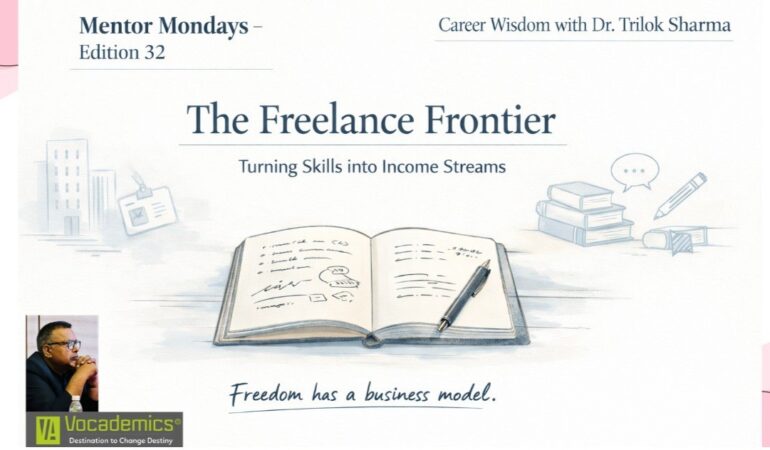
The Freelance Frontier: Turning Skills into Income Streams

Freedom has a business model

In 2018, I made a decision that looked brave from outside but felt deeply unsettling from inside.
I chose to step away from a corporate job and move toward an uncertain, open-ended life as a freelancer.

I was excited. And yes—fearful at the same time.

Excited about freedom. Fearful about whether I’d earn enough to sustain the lifestyle that years of corporate work had shaped.

That mix stayed with me for a while. Anyone who says otherwise is either lying—or hasn’t lived it.

Article content
The turning Point (2018)

When the salary disappears, a simple but uncomfortable question appears:

What exactly am I good at—without a company name behind me?

Not designation. Not hierarchy. Not experience written on paper.

Just skills that people would actually pay for.

Article content
Unbundling Skills

After honest self-reflection, I identified three strengths—not theoretical, but lived:

  • The ability to teach and share acquired knowledge
  • The ability to translate experience into mentoring and training
  • And one strength I had long underestimated—writing

Writing didn’t feel like a career skill earlier. It felt personal. Private. Almost indulgent.

Ironically, it became impossible because of corporate life— and inevitable after I left it.

I began with what I loved most : Teaching.

I started visiting universities as a guest faculty. Classrooms felt like home again. Not because of authority—but because of dialogue.

Students didn’t care about my past titles. They cared whether what I said made sense.

That honesty was refreshing.

Parallelly, I started sharing experience through training programs, mentoring, and career counselling.

Not as “sessions”. As conversations.

And slowly, something interesting happened.

My thoughts started demanding a longer form.

That’s when writing stepped forward.

Article content
Writing Changed Everything

Post-2018, I became an author.

Books that were next to impossible during corporate life found space, time, and courage to exist:

  • The Corporate Hanuman
  • TESOL
  • Ab Krut–Krutya Bhayau Mai Mata

And more are already in the pipeline.

Writing didn’t just add another income stream. It added depth to everything else I do.

Teaching sharpened my writing. Writing refined my mentoring. Mentoring clarified my teaching.

That’s the real magic of freelancing— skills start talking to each other.

Article content
Salary vs Self-Direction

Was there a moment when I thought “Maybe a salaried job was safer”?

Absolutely.

Especially in the early days— when income was uncertain and the pressure to maintain a “respectable life” was real.

But another realization arrived quietly and firmly:

If I return to a salaried job now, I may never come out again.

That clarity changed everything.

Safety stopped being about salary. It became about self-direction.

Today, if you ask me who I am—

Mentor? Teacher? Career architect?

I don’t separate them anymore.

A good mentor is always a teacher. A real teacher shapes careers—directly or indirectly.

So yes, I see myself as three-in-one. And I’m at peace with that identity.

Freelancing didn’t make life easier. It made it honest.

No hiding behind systems. No borrowed credibility. Only relevance, responsibility, and rhythm.

And while I may not yet be a “big brand”, I enjoy my work—and my life—far more than I did in a salaried role.

That joy is not accidental. It’s earned.

If there’s one quiet takeaway from my journey, it’s this:

Don’t search for new talents. Revisit the ones life has already trained you in.

Your freelance frontier is not a leap into the unknown. It’s a return to what you already are—without filters.

CTA

💬Comment your freelance niche idea.

Say it out loud—even if it feels incomplete. That’s how clarity begins.

Read More